
 Vietnam
 Thailand


Ancelotti Confirms Thiago Silva in Brazil World Cup Plans as He Aims to End 24-Year Wait for Glory
In an interview with The Guardian, Brazil head coach Carlo Ancelotti revealed that veteran defender Thiago Silva is still under consideration for the World Cup squad, adding: “He is in good form and has just won the Portuguese league title.” Speaking about the heavy pressure on Vinícius Júnior in the national team, Ancelotti said he is working to help him shed the burden and play with joy and freedom.
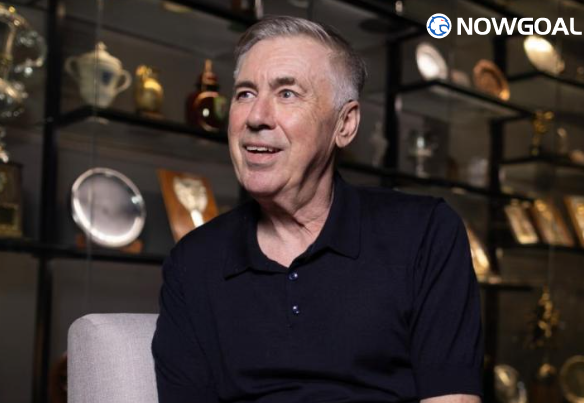
Does Ancelotti have ambition?
The Italian leaned back and smiled.
“Me? No ambition. Why do you ask?”
The reason is obvious: the 66-year-old is one of the most successful managers in football history, with five Champions League titles and league championships in England, France, Germany, Italy and Spain. Yet he still wants more. Last May, he was appointed Brazil head coach with one clear objective: to win the World Cup.
“I’m not obsessed with winning. I just enjoy every moment football gives me. I’m not obsessed with winning the World Cup, but I am honoured to coach the most important national team in the world and to enjoy this passion.”
Ancelotti has played at the World Cup as a player, but this will be his first time leading a team as a coach. His mission is to bring Brazil back to the top of world football and end a 24-year title drought since 2002. However, he does not appear anxious—something that reflects his lifelong love of the game. Even after 47 years in football, his eyes still show genuine enthusiasm for the job.
“I can’t live without football. If I stop coaching, I will still watch matches as a fan. For me, watching TV football is not work, it’s pleasure. I love cinema, and football gives me the same kind of enjoyment. When I stop working in football one day, I will still watch it the same way—no problem.”
Many players describe Ancelotti as the best coach they have worked with, including Kaká, Toni Kroos, Gareth Bale and Vinícius Júnior. What makes him special?
“I honestly don’t know,” he said with a smile. “Maybe my attitude, the way I treat players, the respect I give them as people. I care a lot about personal relationships.”
“A coach’s job is difficult because there are so many things to manage: relationships with players, clubs, the media, and fans. The most difficult and most important part is dealing with people.”
Despite his success, Ancelotti is sometimes labelled as a “man-manager”—a coach who wins through relationships rather than tactics. He dismisses that idea.
“I don’t win titles just because I have good relationships with players. Good relationships help, because they allow you to unlock players’ potential and sometimes push them beyond their limits. But it’s only part of the game. I don’t care what people say about my tactical ability. I can only say I understand all aspects of football.”
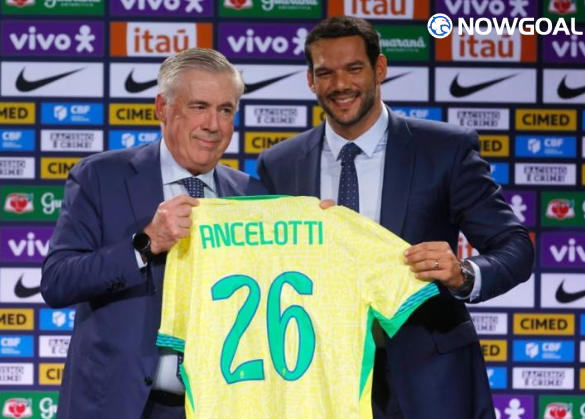
Ancelotti has extended his contract with Brazil until the 2030 World Cup, when he will be 70. The oldest manager in the Premier League is 63-year-old David Moyes, and only three managers in Brazil’s top flight are over 70—and all younger than him.
“Football is always changing, and I try to adapt. Today’s game is more analytical, more intense, more physical. Some tactical elements, especially defensive ones, are not as important as they were ten years ago. Modern coaches focus more on attacking than defending.”
Although he has only recently taken charge of Brazil, Ancelotti believes his experience of working with more than 40 Brazilian players throughout his career gives him deep understanding of the country and its football culture—one of the reasons he got the job.
“I really like the Brazilian spirit. Brazilians have a special emotional connection with the national team shirt. This attachment is unique. In other countries, the national team doesn’t seem as important.”
“Brazil has preserved its culture, its focus on family and religion—things that Europe has partly lost. In sport, Europeans don’t feel the same emotional connection to the national team shirt. I admire the joy of the Brazilian people, the energy of the country, and the beauty of Rio de Janeiro—especially during Carnival.”
Religion, he adds, is significant.
“Religion teaches me how to behave, how to respect others. I am Catholic, and it is important in my life. It teaches me to be a better person.”
“Have I prayed about injuries? Yes,” he laughed, then turned serious. “It is a concern. We already have three major injuries. Hopefully there will be no more before the World Cup.”
Brazil, ranked sixth in the world, have already lost Éder Militão and Rodrygo, while Estêvão is a doubt. Ancelotti has managed only 10 matches so far, with five wins, two draws and three defeats. In building his ideal XI, he is trying to replicate his success at Real Madrid—helping Vinícius Júnior become the world’s best player.
But for Brazil, the 25-year-old has not yet fully delivered on the international stage: 8 goals in 47 appearances. Still, Ancelotti knows how to motivate him.
“You see, he carries too much responsibility for Brazil, especially recently. That responsibility can become a burden. Our job is to help him remove some of that pressure so he can play with joy, energy and all his talent.”
“The Vinícius I see is the same as at Real Madrid: a player who can win matches on his own, a great person. He will be crucial for Brazil at the World Cup. But being the number one star? We don’t need that. We must not focus everything on one player. We have to play as a team—that is the only way to win the World Cup.”
The World Cup squad will be announced on May 18. When asked about Neymar’s possible inclusion, Ancelotti was clear:
“Neymar’s selection depends only on him, on what he shows on the pitch. It is a very clear criterion. This applies not only to Neymar but to most players—talent and physical condition must be assessed. Neymar only needs to prove his physical condition, because his talent is unquestionable. It depends on him, not me.”
Another veteran in contention is former Chelsea and PSG defender Thiago Silva, 41, who had an excellent season at Porto and hopes to play in a fifth World Cup.
“Thiago Silva is in our plans, yes. He is in good form and has just won the Portuguese league. His physical condition is excellent.”
“Leaders are important. Fortunately, this team has respected leaders such as Alisson, Casemiro, Marquinhos and Raphinha. They don’t speak much, but they lead by example. In that sense, there is no problem.”
When Ancelotti was appointed, Brazilian media headlines described it as “leaving the biggest club in the world for the most important national team.” He agrees there are similarities with club management but says the differences are greater:
“The way you work is different, but the most important lesson I learned at Real Madrid is high standards. In Brazil, that applies too. When you set high demands, you increase your chances of winning. Real Madrid is the biggest club in the world because of its standards. Strictness brings the best out of everyone.”
As a dog lover, Ancelotti sees his dogs as an escape from football pressures:
“I have three dogs in Canada. Dogs are not human, but they are more loyal than people. They don’t care if you win or lose. They just want your presence.”
So how does Brazil, drawn with Morocco, Haiti and Scotland, win the World Cup?
“Talent. I have a very talented team. And after 24 years without a title, the hunger is enormous. I believe we will have a great World Cup.”
Does Ancelotti have ambition?
The Italian leaned back and smiled.
“Me? No ambition. Why do you ask?”
The reason is obvious: the 66-year-old is one of the most successful managers in football history, with five Champions League titles and league championships in England, France, Germany, Italy and Spain. Yet he still wants more. Last May, he was appointed Brazil head coach with one clear objective: to win the World Cup.
“I’m not obsessed with winning. I just enjoy every moment football gives me. I’m not obsessed with winning the World Cup, but I am honoured to coach the most important national team in the world and to enjoy this passion.”
Ancelotti has played at the World Cup as a player, but this will be his first time leading a team as a coach. His mission is to bring Brazil back to the top of world football and end a 24-year title drought since 2002. However, he does not appear anxious—something that reflects his lifelong love of the game. Even after 47 years in football, his eyes still show genuine enthusiasm for the job.
“I can’t live without football. If I stop coaching, I will still watch matches as a fan. For me, watching TV football is not work, it’s pleasure. I love cinema, and football gives me the same kind of enjoyment. When I stop working in football one day, I will still watch it the same way—no problem.”
Many players describe Ancelotti as the best coach they have worked with, including Kaká, Toni Kroos, Gareth Bale and Vinícius Júnior. What makes him special?
“I honestly don’t know,” he said with a smile. “Maybe my attitude, the way I treat players, the respect I give them as people. I care a lot about personal relationships.”
“A coach’s job is difficult because there are so many things to manage: relationships with players, clubs, the media, and fans. The most difficult and most important part is dealing with people.”
Despite his success, Ancelotti is sometimes labelled as a “man-manager”—a coach who wins through relationships rather than tactics. He dismisses that idea.
“I don’t win titles just because I have good relationships with players. Good relationships help, because they allow you to unlock players’ potential and sometimes push them beyond their limits. But it’s only part of the game. I don’t care what people say about my tactical ability. I can only say I understand all aspects of football.”
Ancelotti has extended his contract with Brazil until the 2030 World Cup, when he will be 70. The oldest manager in the Premier League is 63-year-old David Moyes, and only three managers in Brazil’s top flight are over 70—and all younger than him.
“Football is always changing, and I try to adapt. Today’s game is more analytical, more intense, more physical. Some tactical elements, especially defensive ones, are not as important as they were ten years ago. Modern coaches focus more on attacking than defending.”
Although he has only recently taken charge of Brazil, Ancelotti believes his experience of working with more than 40 Brazilian players throughout his career gives him deep understanding of the country and its football culture—one of the reasons he got the job.
“I really like the Brazilian spirit. Brazilians have a special emotional connection with the national team shirt. This attachment is unique. In other countries, the national team doesn’t seem as important.”
“Brazil has preserved its culture, its focus on family and religion—things that Europe has partly lost. In sport, Europeans don’t feel the same emotional connection to the national team shirt. I admire the joy of the Brazilian people, the energy of the country, and the beauty of Rio de Janeiro—especially during Carnival.”
Religion, he adds, is significant.
“Religion teaches me how to behave, how to respect others. I am Catholic, and it is important in my life. It teaches me to be a better person.”
“Have I prayed about injuries? Yes,” he laughed, then turned serious. “It is a concern. We already have three major injuries. Hopefully there will be no more before the World Cup.”
Brazil, ranked sixth in the world, have already lost Éder Militão and Rodrygo, while Estêvão is a doubt. Ancelotti has managed only 10 matches so far, with five wins, two draws and three defeats. In building his ideal XI, he is trying to replicate his success at Real Madrid—helping Vinícius Júnior become the world’s best player.
But for Brazil, the 25-year-old has not yet fully delivered on the international stage: 8 goals in 47 appearances. Still, Ancelotti knows how to motivate him.
“You see, he carries too much responsibility for Brazil, especially recently. That responsibility can become a burden. Our job is to help him remove some of that pressure so he can play with joy, energy and all his talent.”
“The Vinícius I see is the same as at Real Madrid: a player who can win matches on his own, a great person. He will be crucial for Brazil at the World Cup. But being the number one star? We don’t need that. We must not focus everything on one player. We have to play as a team—that is the only way to win the World Cup.”
The World Cup squad will be announced on May 18. When asked about Neymar’s possible inclusion, Ancelotti was clear:
“Neymar’s selection depends only on him, on what he shows on the pitch. It is a very clear criterion. This applies not only to Neymar but to most players—talent and physical condition must be assessed. Neymar only needs to prove his physical condition, because his talent is unquestionable. It depends on him, not me.”
Another veteran in contention is former Chelsea and PSG defender Thiago Silva, 41, who had an excellent season at Porto and hopes to play in a fifth World Cup.
“Thiago Silva is in our plans, yes. He is in good form and has just won the Portuguese league. His physical condition is excellent.”
“Leaders are important. Fortunately, this team has respected leaders such as Alisson, Casemiro, Marquinhos and Raphinha. They don’t speak much, but they lead by example. In that sense, there is no problem.”
When Ancelotti was appointed, Brazilian media headlines described it as “leaving the biggest club in the world for the most important national team.” He agrees there are similarities with club management but says the differences are greater:
“The way you work is different, but the most important lesson I learned at Real Madrid is high standards. In Brazil, that applies too. When you set high demands, you increase your chances of winning. Real Madrid is the biggest club in the world because of its standards. Strictness brings the best out of everyone.”
As a dog lover, Ancelotti sees his dogs as an escape from football pressures:
“I have three dogs in Canada. Dogs are not human, but they are more loyal than people. They don’t care if you win or lose. They just want your presence.”
So how does Brazil, drawn with Morocco, Haiti and Scotland, win the World Cup?
“Talent. I have a very talented team. And after 24 years without a title, the hunger is enormous. I believe we will have a great World Cup.”
From:News
The Most Popular
-
 Al Nassr vs Al-Hilal: Saudi Title Race Set for Explosive Showdown
 -
 Southampton vs Middlesbrough: Wembley Spot on the Line in Heated Playoff Clash
 -
 Barcelona Eye 12th Straight La Liga Win Against Desperate Alavés
 -
 Inter Chase Historic Double in Coppa Italia Final Showdown With Lazio
 -
 Osasuna vs Atletico Madrid: Griezmann Leads Atletico's Tough Test at El Sadar
 -
 13th May, Spanish La Liga---Villarreal VS Sevilla Prediction
 Telegram
 Facebook
 X
X