
 Vietnam
 Thailand


The Athletic: Ronaldo’s poor performance cannot be blamed entirely on him; fan adoration and the coach’s insistence on selecting him are also responsible.
Portugal drew 1–1 with the Democratic Republic of the Congo, with Cristiano Ronaldo starting and playing the full 90 minutes. After the match, he received the lowest rating in the Portugal squad. The Athletic noted that Ronaldo’s decline in form should not be blamed solely on him, as fan admiration, coaches’ continued reliance on him, and the pursuit of records have made it difficult for him to step away, while age-related decline is an objective reality.
The report said that, objectively speaking, not all of this can be blamed on him.
For a long time, everyone around him has indulged Ronaldo, constantly reinforcing the idea that he can still compete at the very highest level. Even though countless details on the pitch clearly show he is no longer at his peak, it would be difficult for anyone to willingly step away from the game they love. If a head coach deliberately ignores real on-pitch performance and stubbornly keeps him in the starting lineup, over time he will naturally develop the illusion that his form is still at an elite level.
When you step onto the pitch and see thousands of fans in the stands who came specifically for you—some even holding signs saying, “Whether or not you win the World Cup, you will always be the greatest in my eyes”—it is hard not to believe you still deserve all the expectations placed upon you.
Letting go of the past is extremely difficult. There is always another record to chase, another major tournament ahead, and the near-mythical 1,000 career goals milestone still within reach. Moreover, former rivals and lifelong competitors are still shining on the pitch.
But today’s Ronaldo is no longer able to keep up. At least his current level is no longer sufficient for a Portugal side built to compete for titles.
In Houston, USA, during Portugal’s 1–1 draw with DR Congo, Ronaldo was largely invisible for the first hour. He was not making glaring mistakes, but rather drifting through the game like an empty shadow—physically present, but without meaningful impact.
Over the full 90 minutes, he did not produce any disastrous misses, poor passes, or game-costing errors—nothing that would be clipped into a blooper reel. But he remained disconnected from the rhythm of the match, so subdued that he was almost unnoticeable.
Only in the second half did he get two real scoring chances. Both came from similar patterns: cutbacks from the byline into the near-post area, where he attempted first-time finishes. Both shots, however, went wide.
Objectively speaking, neither chance was a simple one-on-one. But in his prime, Ronaldo would almost certainly have converted them given his finishing ability. The first attempt was especially difficult, as the ball arrived slightly behind him, requiring quick adjustment before shooting.
The second chance was more symbolic: if he had let the ball go, Bruno Fernandes would have had a much better shooting angle. As Thierry Henry pointed out on Fox Sports: “The team needs a goal, not you insisting on shooting. If he just lets it run to the six-yard box, Bruno has a simple finish.”
After that missed opportunity, Ronaldo once again faded from the game.
The most telling moment of his decline was not those missed shots, but a later cross into the far post: the ball arrived, and Ronaldo simply waited. In his prime, he would have leapt and powered a header into the net. This time, he did not even jump. Whether due to physical limitation or lack of intent is unclear. DR Congo defender Chancel Mbemba easily cleared the ball—something Ronaldo once dominated with ease.
After the miss, thousands of Portuguese fans in the stadium chanted his name, hoping to awaken a vintage performance. Ronaldo responded by waving to the crowd, as if trying to summon past greatness, but it ultimately came to nothing.
The only remaining justification for his continued presence on the pitch is the idea that he draws defenders and creates space. Wayne Rooney noted in commentary: “Most of the time he is standing in offside positions. It’s not laziness, it’s intentional. Defenders have to stay alert for him, which opens space for others.”
But in reality, he was creating no real threat—he no longer has the ability to turn those positions into decisive actions.
Opponents are fully aware of this. After the match, DR Congo players were respectful and diplomatic, but their comments hinted at the truth.
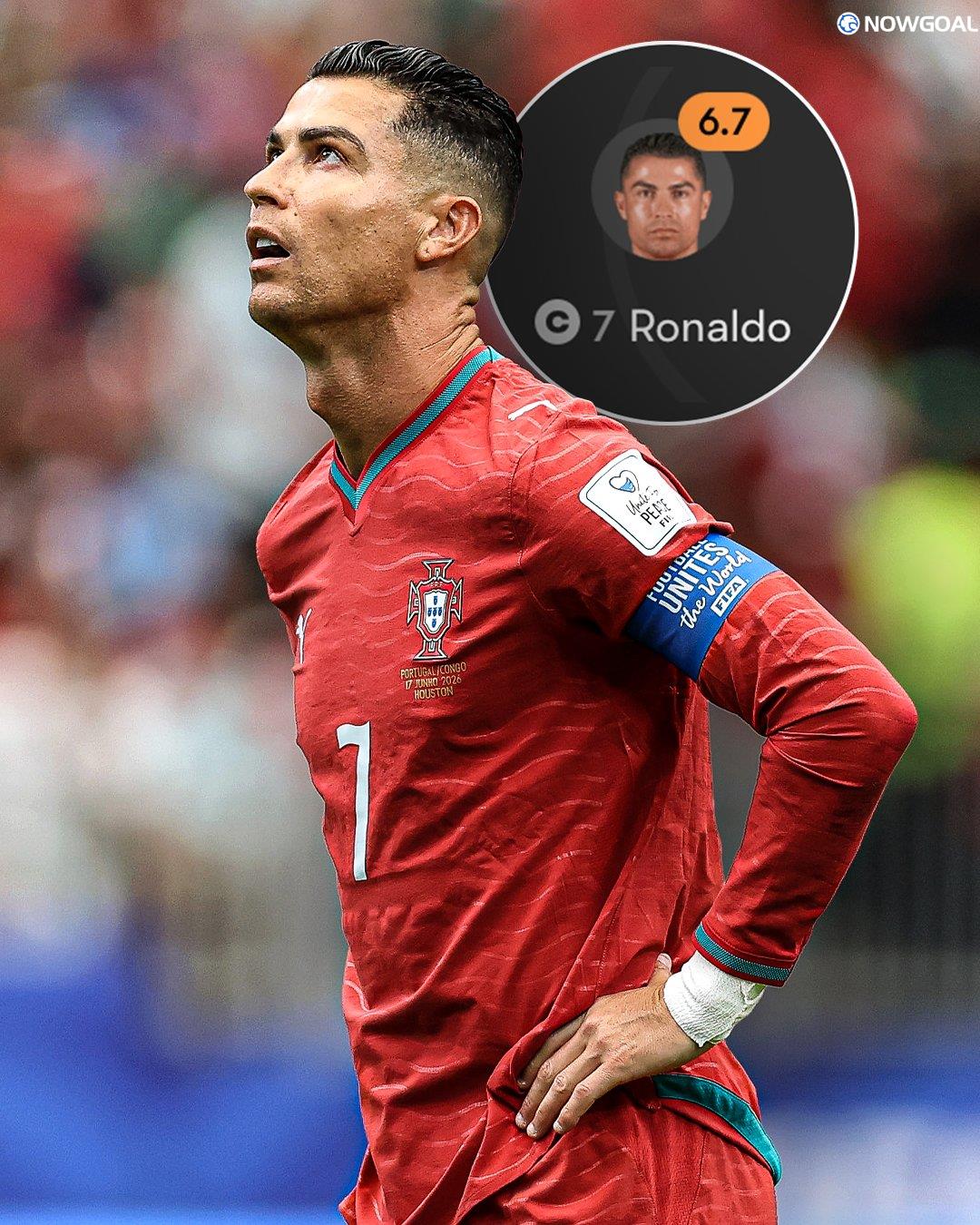
Midfielder Ngal’ayel Mukau said: “We knew he is not the same as before. We expected his movement to be limited. I hoped he would show more, but time waits for no one. It was an honour to share the pitch with him.”
Objectively, however, this gap is not entirely Ronaldo’s fault. Head coach Roberto Martínez continued to defend his selection, starting him and keeping him on for the full 90 minutes. He told the media: “In matches where it is hard to break down the opposition, Ronaldo’s individual quality is crucial. When you need a goal, it makes no sense to substitute the greatest goalscorer in history.”
In doing so, he unintentionally revealed the truth: Ronaldo belongs to the past. This decline has been visible for some time—this was his tenth consecutive major tournament match without scoring.
If Martínez had used him purely as a symbolic figure or late-game option, similar to how Carlo Ancelotti has used Neymar, or as a designated penalty taker, the role might still make sense.
But insisting on playing a 41-year-old as the attacking focal point, with minimal movement and little threat, while surrounded by a highly talented attacking unit, is far more questionable. Even in Portugal’s World Cup qualifying match against Ireland, Ronaldo received a red card that should have resulted in a three-match suspension, but was controversially reduced to one. Had he served the full suspension, Portugal’s situation might have looked very different.
By contrast, on the previous day, top stars delivered decisive performances: Erling Haaland scored twice for Norway, Kylian Mbappé also netted a brace for France, and Lionel Messi—Ronaldo’s greatest rival—recorded a hat-trick for Argentina.
At the final whistle, Ronaldo walked slowly toward the tunnel alone. He paused midway, turned back, and shook hands with teammates and opponents before continuing on his way.
Several teammates followed him, but were called back by the coach to gather at midfield and acknowledge the fans. Ronaldo, however, had already disappeared into the tunnel. There is no indication he intended to ignore teammates or supporters, but his solitary exit carried symbolic weight: at this stage, he can no longer meaningfully help the team.
In the end, it is not entirely his fault. He simply cannot return to his peak anymore.
The report said that, objectively speaking, not all of this can be blamed on him.
For a long time, everyone around him has indulged Ronaldo, constantly reinforcing the idea that he can still compete at the very highest level. Even though countless details on the pitch clearly show he is no longer at his peak, it would be difficult for anyone to willingly step away from the game they love. If a head coach deliberately ignores real on-pitch performance and stubbornly keeps him in the starting lineup, over time he will naturally develop the illusion that his form is still at an elite level.
When you step onto the pitch and see thousands of fans in the stands who came specifically for you—some even holding signs saying, “Whether or not you win the World Cup, you will always be the greatest in my eyes”—it is hard not to believe you still deserve all the expectations placed upon you.
Letting go of the past is extremely difficult. There is always another record to chase, another major tournament ahead, and the near-mythical 1,000 career goals milestone still within reach. Moreover, former rivals and lifelong competitors are still shining on the pitch.
But today’s Ronaldo is no longer able to keep up. At least his current level is no longer sufficient for a Portugal side built to compete for titles.
In Houston, USA, during Portugal’s 1–1 draw with DR Congo, Ronaldo was largely invisible for the first hour. He was not making glaring mistakes, but rather drifting through the game like an empty shadow—physically present, but without meaningful impact.
Over the full 90 minutes, he did not produce any disastrous misses, poor passes, or game-costing errors—nothing that would be clipped into a blooper reel. But he remained disconnected from the rhythm of the match, so subdued that he was almost unnoticeable.
Only in the second half did he get two real scoring chances. Both came from similar patterns: cutbacks from the byline into the near-post area, where he attempted first-time finishes. Both shots, however, went wide.
Objectively speaking, neither chance was a simple one-on-one. But in his prime, Ronaldo would almost certainly have converted them given his finishing ability. The first attempt was especially difficult, as the ball arrived slightly behind him, requiring quick adjustment before shooting.
The second chance was more symbolic: if he had let the ball go, Bruno Fernandes would have had a much better shooting angle. As Thierry Henry pointed out on Fox Sports: “The team needs a goal, not you insisting on shooting. If he just lets it run to the six-yard box, Bruno has a simple finish.”
After that missed opportunity, Ronaldo once again faded from the game.
The most telling moment of his decline was not those missed shots, but a later cross into the far post: the ball arrived, and Ronaldo simply waited. In his prime, he would have leapt and powered a header into the net. This time, he did not even jump. Whether due to physical limitation or lack of intent is unclear. DR Congo defender Chancel Mbemba easily cleared the ball—something Ronaldo once dominated with ease.
After the miss, thousands of Portuguese fans in the stadium chanted his name, hoping to awaken a vintage performance. Ronaldo responded by waving to the crowd, as if trying to summon past greatness, but it ultimately came to nothing.
The only remaining justification for his continued presence on the pitch is the idea that he draws defenders and creates space. Wayne Rooney noted in commentary: “Most of the time he is standing in offside positions. It’s not laziness, it’s intentional. Defenders have to stay alert for him, which opens space for others.”
But in reality, he was creating no real threat—he no longer has the ability to turn those positions into decisive actions.
Opponents are fully aware of this. After the match, DR Congo players were respectful and diplomatic, but their comments hinted at the truth.
Midfielder Ngal’ayel Mukau said: “We knew he is not the same as before. We expected his movement to be limited. I hoped he would show more, but time waits for no one. It was an honour to share the pitch with him.”
Objectively, however, this gap is not entirely Ronaldo’s fault. Head coach Roberto Martínez continued to defend his selection, starting him and keeping him on for the full 90 minutes. He told the media: “In matches where it is hard to break down the opposition, Ronaldo’s individual quality is crucial. When you need a goal, it makes no sense to substitute the greatest goalscorer in history.”
In doing so, he unintentionally revealed the truth: Ronaldo belongs to the past. This decline has been visible for some time—this was his tenth consecutive major tournament match without scoring.
If Martínez had used him purely as a symbolic figure or late-game option, similar to how Carlo Ancelotti has used Neymar, or as a designated penalty taker, the role might still make sense.
But insisting on playing a 41-year-old as the attacking focal point, with minimal movement and little threat, while surrounded by a highly talented attacking unit, is far more questionable. Even in Portugal’s World Cup qualifying match against Ireland, Ronaldo received a red card that should have resulted in a three-match suspension, but was controversially reduced to one. Had he served the full suspension, Portugal’s situation might have looked very different.
By contrast, on the previous day, top stars delivered decisive performances: Erling Haaland scored twice for Norway, Kylian Mbappé also netted a brace for France, and Lionel Messi—Ronaldo’s greatest rival—recorded a hat-trick for Argentina.
At the final whistle, Ronaldo walked slowly toward the tunnel alone. He paused midway, turned back, and shook hands with teammates and opponents before continuing on his way.
Several teammates followed him, but were called back by the coach to gather at midfield and acknowledge the fans. Ronaldo, however, had already disappeared into the tunnel. There is no indication he intended to ignore teammates or supporters, but his solitary exit carried symbolic weight: at this stage, he can no longer meaningfully help the team.
In the end, it is not entirely his fault. He simply cannot return to his peak anymore.
The Most Popular
-
 Spain vs Uruguay: Group H Showdown for Top Spot and Knockout Place
 -
 Bosnia vs Qatar: Do-or-Die World Cup Clash in Seattle
 -
 Scotland vs Brazil: Historic Test in Miami with Knockout Hopes on the Line
 -
 USA Chase Perfect Group Stage as Turkey Seek Pride in Final Test
 -
 Switzerland vs Canada: Battle for Group B Supremacy in Vancouver
 -
 Morocco vs Haiti: Atlas Lions Close in on Knockout Stage in Atlanta
 Telegram
 Facebook
 X
X