
 Vietnam
 Thailand


Why Did Ronaldo Nazário Look Like a Sleepwalker in the 1998 World Cup Final?
At the 1998 FIFA World Cup, the defending champions Brazil were the biggest favourites to win the title, largely because they had what was widely considered the best striker in the world at the time: Ronaldo Nazário.
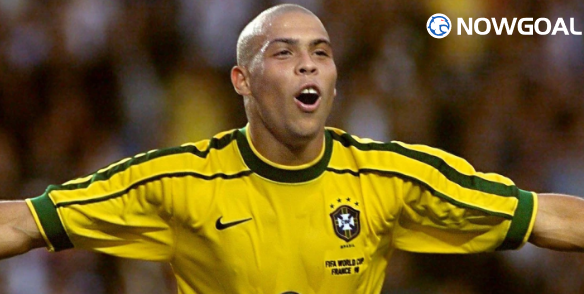
In 1998, Ronaldo was universally recognised as the finest forward in world football.
Ronaldo combined incredible speed with outstanding technique and possessed remarkable efficiency in front of goal. He often dribbled past defenders and scored in ways that seemed unimaginable. In 1996, while playing for FC Barcelona, Ronaldo scored a famous goal in a 5-1 away victory over SD Compostela in La Liga. During the run, he beat several defenders in succession, and even when opponents tried to pull him back, they still could not stop him. After witnessing the goal, Barcelona manager Bobby Robson remarked, “It’s hard to imagine that goal was scored by a human being.” From that moment on, Ronaldo earned the nickname “The Alien.”
Ronaldo’s famous goal for Barcelona was what earned him the nickname “The Alien.”
In 1997, Ronaldo Nazário joined Inter Milan for a then world-record transfer fee of $32 million. At the time, he was only 21 years old. In his very first season with Inter, he scored 34 goals in 44 appearances, winning both the FIFA World Player of the Year award and the Ballon d’Or in 1997. By 1998, the young striker, still only 22, had become the key figure and biggest star of the Brazilian national team heading into the World Cup.
In fact, Ronaldo had already travelled to the World Cup with Brazil back in 1994. However, he was only 18 at the time and mainly there to learn from the senior players and experience the atmosphere. He did not play a single match. Although Brazil eventually won the tournament, that triumph had little to do with him personally. The 1998 World Cup was Ronaldo’s second appearance at the tournament, but his role was completely different from four years earlier: he was now Brazil’s leading star and most dependable goalscorer.
Meanwhile, hosts France national football team were eager to challenge for the title on home soil, but they were not considered the favourites. Originally, France’s midfield leader was supposed to be Eric Cantona of Manchester United F.C.. However, during a Premier League match in 1995, Cantona became involved in a violent altercation with a fan of Crystal Palace F.C., infamously launching a kung-fu style kick into the crowd. As a result, he received an eight-month suspension.
The incident caused enormous controversy. During his suspension, Cantona missed valuable time integrating with the national team, and his rebellious personality also made him difficult to manage. France manager Aimé Jacquet took the opportunity to remove him from the national team plans altogether. Afterwards, Jacquet established Zinedine Zidane, who has Algerian heritage, as the new midfield leader of the French team.
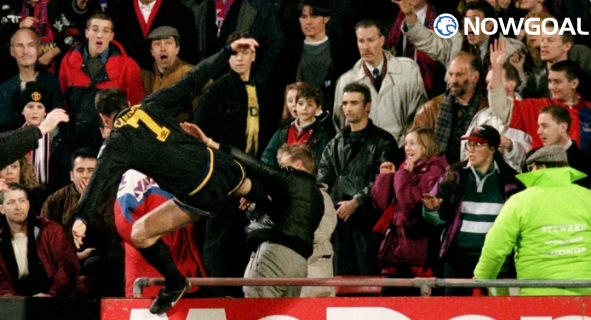
That infamous kick at a fan effectively brought an end to Eric Cantona’s international career
Zinedine Zidane was first called up to the France national football team in 1994. His debut came in a friendly match against the Czech Republic. Coming off the bench, Zidane scored twice to help France recover from a 0-2 deficit and secure a draw. He later represented France as a first-team regular at UEFA Euro 1996.
France did not win that tournament, being eliminated in the semi-finals, and Zidane’s performances were generally considered solid but unspectacular.
However, France manager Aimé Jacquet always placed enormous trust in Zidane. At the 1998 FIFA World Cup, Zidane remained the creative heart of the national team. During the early stages of the tournament, his performances showed both quality and flaws. He provided two assists in the group stage, but he was also sent off after stamping on a Saudi Arabian player during France’s match against Saudi Arabia national football team.
After advancing from the group stage, France defeated Paraguay national football team 1-0 in the Round of 16, overcame Italy national football team on penalties in the quarter-finals, and then beat Croatia national football team 2-1 in the semi-finals to reach the final. Yet throughout all of those knockout matches, Zidane failed to score a single goal.
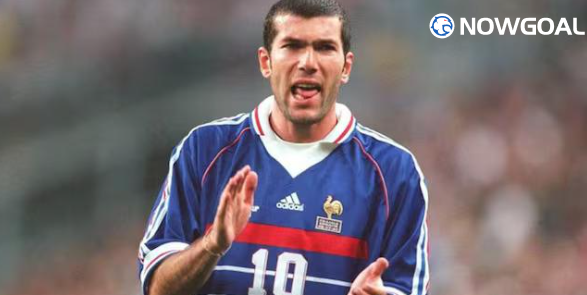
Before the final, Zinedine Zidane had not scored a single goal at the 1998 FIFA World Cup
By comparison, Ronaldo Nazário had been far more impressive for Brazil national football team throughout the tournament. As Brazil advanced all the way to the final, Ronaldo contributed four goals and three assists. His most important performance came in the semi-final against Netherlands national football team, where he scored during the match and then confidently converted Brazil’s first penalty in the shootout, helping his team eliminate the Dutch and set up a final against France.
On the evening of July 12, 1998, the World Cup final was set to take place at Stade de France. Earlier that same day, after lunch, Ronaldo returned to his hotel room. His roommate was Brazil left-back Roberto Carlos.
At the time, Christian Karembeu of the French team called Roberto Carlos on the phone. Karembeu and Carlos were teammates at Real Madrid CF, and he simply wanted to chat before the final. While Carlos was speaking on the phone, Ronaldo was lying on the bed watching a Formula One race on television.
Suddenly, Ronaldo began convulsing and lost consciousness. Roberto Carlos immediately sensed that something was wrong. Hurriedly ending the call, he rushed over to check on Ronaldo. He saw Ronaldo shaking violently with foam coming from his mouth. Shocked, Carlos shouted loudly for help.
Teammates from nearby rooms quickly rushed in. Forward Edmundo was the first to arrive, followed by defensive midfielder César Sampaio, who pulled Ronaldo’s tongue forward to prevent him from swallowing it. When team doctor Lídio Toledo arrived, he witnessed a frightening scene: Ronaldo was breathing heavily and saliva was running from the corner of his mouth. Roberto Carlos reportedly told him, “It could be epilepsy.”
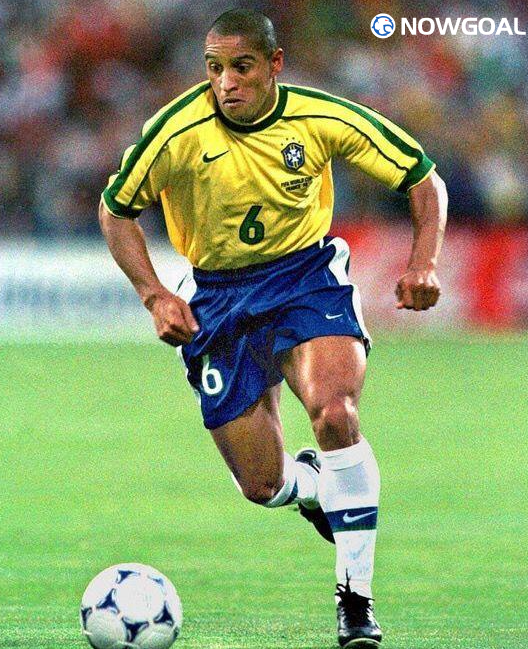
At first, Ronaldo Nazário eventually regained consciousness. He had no memory of what had just happened and had no idea why he had collapsed. Teammate Leonardo accompanied him on a walk through the hotel garden and explained the situation to him. Ronaldo also learned that the coaching staff did not intend to let him play in the World Cup final.
According to reports that later emerged, Brazil technical adviser Zico opposed allowing Ronaldo to play, and several players led by Leonardo agreed with that view. However, another group within the squad, headed by captain Dunga, desperately wanted Ronaldo in the lineup. In their eyes, even if he was not fully fit, he remained indispensable.
Ronaldo was taken to hospital, where doctors carried out neurological examinations. The entire process lasted around three hours, yet the exact cause of his seizure remained unclear. Doctors found no obvious physical abnormalities, and Brazil team physician Lídio Toledo also concluded that Ronaldo was fit enough to play.
So what exactly had happened?
Years later, cardiologist Bruno Caru offered a possible explanation: “Ronaldo was lying in bed watching a Formula One race. A movement of his neck compressed the carotid sinus, which regulates heart rate and blood pressure. His heart rate dropped suddenly, which caused the fainting and convulsions.”
However, Roberto Carlos’s earlier comment — “It could be epilepsy” — may have influenced the doctors’ judgement. Believing the episode to be epileptic in nature, they reportedly treated Ronaldo with Phenobarbital, a powerful anti-seizure drug. The medication suppresses brain activity, and its effects would later become a major talking point.
Brazilian players were traditionally known for their relaxed and optimistic mentality. Beyond personality, that confidence also came from their belief in their own superiority. In previous tournaments, the team bus heading to matches would usually be filled with laughter and music. But Ronaldo’s sudden collapse completely changed the atmosphere within the squad.
While the other players were travelling to the stadium, Ronaldo had not even left the hospital yet. Many players still did not fully understand what had happened; they had only heard that “Ronaldo wasn’t feeling well and had gone to hospital.” A sense of dread spread through the team. The players sat in silence on the bus. No music played, and nobody joked or chatted.
British commentator John Motson was preparing to broadcast the World Cup final live on radio to audiences around the world. When he received the official team sheets, he was stunned to discover that Ronaldo’s name was missing from Brazil’s starting lineup, with Edmundo listed in his place.
Motson and his colleagues even wondered whether they had read the lineup incorrectly, unable to understand what was happening. He immediately asked fellow broadcaster Ray Stubbs to contact Brazilian legend Pelé for clarification. But after making inquiries, the answer that came back was simple: even Pelé did not know what was going on.
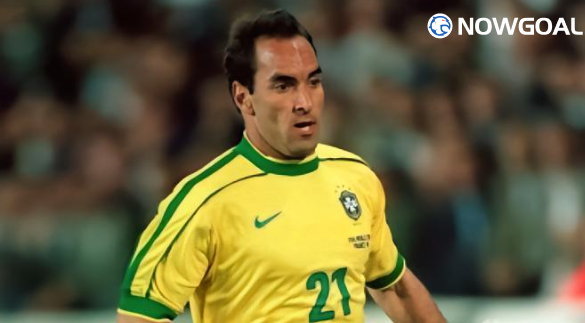
Brazil had originally planned to replace Ronaldo Nazário in the starting lineup with Edmundo
It was as if a concert was about to begin, only for the lead singer of the band to suddenly be unable to perform. The commentators grew increasingly anxious until they received a revised team sheet. This time, Ronaldo’s name had reappeared in the lineup, replacing Edmundo, who had originally been selected to start.
The confusion only deepened. Even though Ronaldo’s name was back on the list, nobody knew whether he would actually step onto the pitch. Football journalists around the world offered wildly different interpretations, and some even pushed conspiracy theories, suggesting that Brazil national football team were deliberately using the situation to unsettle France national football team psychologically.
Meanwhile, inside the French dressing room, many players also believed it was all part of a Brazilian mind game. Defender Lilian Thuram reportedly said, “Leave Ronaldo out? Impossible! They’re trying to fool us with this trick.”
But it soon became obvious that something genuinely was wrong within the Brazilian camp. The team even delayed going out for their pre-match warm-up. Commentator John Motson later recalled: “Clearly, something had happened in Brazil’s dressing room, but we had no idea what.”
So what exactly was happening behind those closed doors?
After receiving brief treatment at the hospital, Ronaldo eventually arrived at Brazil’s dressing room. He immediately made his position clear to head coach Mário Zagallo: he wanted to play in the final.
“I’m fine. I don’t feel anything wrong,” Ronaldo insisted. He then handed over the doctors’ examination results and added, “The tests say there’s no problem. I want to play.”
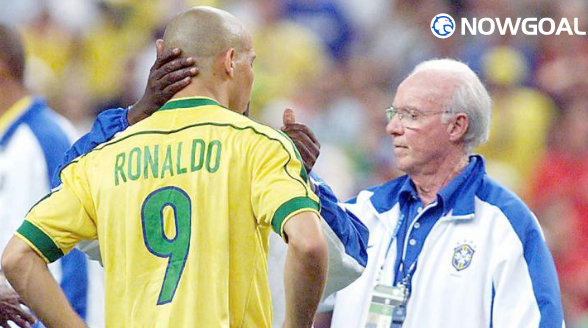
Ronaldo Nazário’s stance was absolutely firm. He later recalled: “I didn’t give the coach any other option. He had to accept my decision.” His teammates were delighted, and their confidence ahead of the final immediately grew. Goalkeeper Dida later said, “We all knew Ronaldo was capable of anything on the pitch.”
It was precisely because of Ronaldo’s insistence that coach Mário Zagallo decided to change the starting lineup once again. After all, when a superstar of Ronaldo’s stature believes he is fit to play, it is almost impossible for a manager to leave him out. However, the late reversal also created another serious problem. Earlier that day, Zagallo had hurriedly prepared an entirely new tactical plan for a Brazil side without Ronaldo. Once Ronaldo returned, those emergency plans suddenly became useless.
Meanwhile, France national football team were thoroughly prepared. Before the match, coach Aimé Jacquet had warned his players that Brazil national football team looked vulnerable when defending corners. If France could deliver quality balls into the box, they would have an excellent chance of scoring.
The match unfolded exactly as he predicted.
In the 27th minute, France won a corner on the left side. Midfielder Emmanuel Petit swung an inswinging cross into the area, finding Zinedine Zidane, who had not scored at all earlier in the tournament. Standing 1.85 metres tall, Zidane rose above the Brazilian defence and powered a header into the net.
Then, deep into first-half stoppage time, France earned another corner, this time from the right. Youri Djorkaeff delivered the cross, and once again Zidane attacked the ball first. The header slipped through the legs of Brazilian defender Roberto Carlos and flew into the net.
France were suddenly 2-0 ahead.
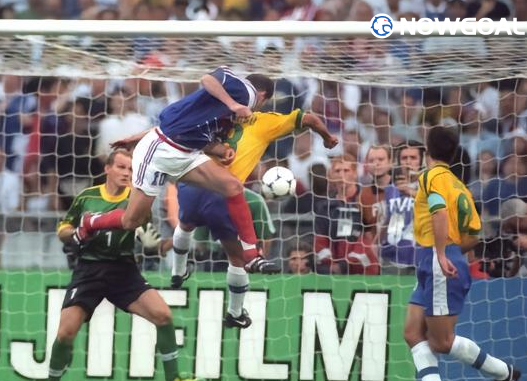
Zinedine Zidane scored twice with headers in the final
Ironically, although Zidane was quite tall, heading was never considered one of his greatest strengths. Throughout his entire professional career, he scored very few goals with his head. Yet in this World Cup final, it was almost as if he had divine assistance, as he scored twice against Brazil in exactly the same fashion.
At that point, France national football team were already in a commanding position. But in the 68th minute, the match suddenly took another dramatic turn. French centre-back Marcel Desailly received his second yellow card of the game and was sent off. France now had to survive more than twenty minutes with only ten men, and the suspense of the final immediately returned.
Brazil national football team quickly responded by bringing on striker Edmundo in an attempt to strengthen their attack. France reacted instantly as well, introducing defensive midfielder Patrick Vieira to add more steel and energy in midfield.
After Desailly’s dismissal, midfielder Emmanuel Petit dropped back into defence to partner Frank Leboeuf at centre-back. As France continued to defend courageously, time slowly ticked away. With only five minutes remaining, the outcome of the match already seemed inevitable. The crowd inside Stade de France had erupted into celebration, waiting for France to be crowned world champions.
Petit himself could barely contain his emotions. He shouted to Leboeuf: “My dream has come true!”
Leboeuf, however, immediately interrupted him: “What are you talking about? Concentrate on the game!”
There was a reason why Petit felt so emotional. When he was still a child, he had once written: “One day, we will beat Brazil 2-0 at home and win the World Cup final.” At the time he wrote those words, France had not even been awarded the hosting rights for the tournament. Now, with France leading 2-0 and the match nearing its conclusion, Petit felt as though his childhood dream had come to life.
Then came the final moments of the match. France launched a counterattack, and Petit received a superb pass from his Arsenal F.C. teammate Patrick Vieira. Racing forward at full speed, Petit delicately lifted the ball past the goalkeeper and into Brazil’s net once again.
France led 3-0.
After the match, the Daily Mirror celebrated the famous “Arsenal connection” by printing the headline: “Arsenal Won the World Cup!”
And with that goal, Petit personally rewrote his own childhood prophecy: the score in the World Cup final against Brazil would not be 2-0, but 3-0.
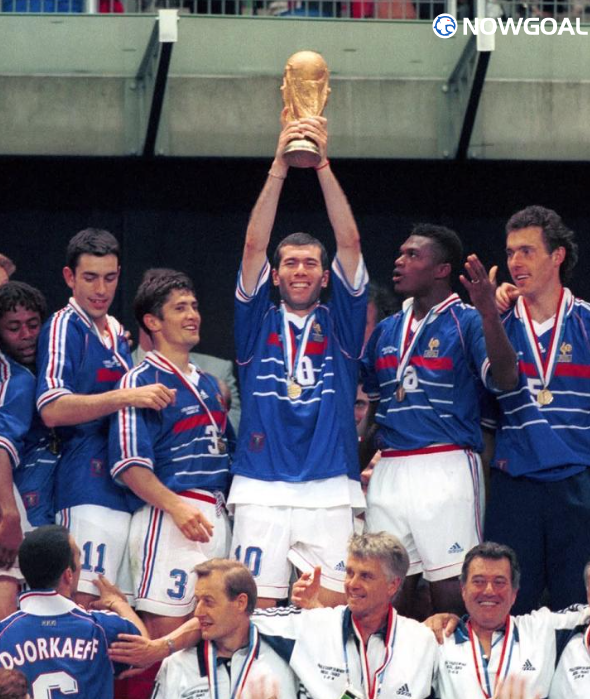
Zinedine Zidane lifted the World Cup trophy high into the air
At the final whistle, France national football team had secured a stunning 3-0 victory, winning the FIFA World Cup for the very first time in their history.
It is worth noting that before the tournament began, France coach Aimé Jacquet had faced fierce criticism from the media. The French newspaper L'Équipe portrayed him as an arrogant schoolteacher who only understood football in theory, lacking intelligence, imagination, and elegance. The paper also criticised his cautious tactical approach and confidently predicted that Jacquet would never lead France to success.
Those attacks deeply hurt Jacquet. In response, he lashed out at what he called “certain media outlets,” accusing them of being filled with “thugs, incompetents, dishonest and irresponsible people.”
After France won the World Cup, however, L'Équipe editor Jérôme Bureau publicly admitted the paper had been wrong: “Although we had serious doubts about Jacquet a few weeks ago, today we sincerely congratulate him. We hope he can hear these words.”
Jacquet, though, refused to forgive them. He replied: “Some sections of the media shamelessly lied. I will never forgive them. I feel nothing but contempt for those people.”
France’s triumph was also helped by the fact that Ronaldo Nazário was almost completely ineffective in the final. Throughout the match, he appeared dazed and far from his usual self, creating very little danger. Nevertheless, thanks to his outstanding performances in the earlier rounds, Ronaldo was still awarded the Golden Ball as the best player of the tournament.
After the final, many people argued in hindsight that Brazil might actually have performed better if coach Mário Zagallo had refused to play Ronaldo.
At the same time, conspiracy theories began to spread. Some claimed that Nike — Brazil’s sponsor and Ronaldo’s personal sponsor — had pressured Zagallo into starting Ronaldo, and that the coach had eventually given in. However, no concrete evidence has ever been produced to support those accusations.
Ironically, Edmundo, the man who lost his starting place when Ronaldo returned to the lineup, strongly believed the conspiracy theory. Years later, he recalled: “Nike employees were on standby 24 hours a day, almost like members of the coaching staff. Their power was enormous. That’s all I can say.”
After the match, one photograph became especially famous: Ronaldo stood on the pitch looking devastated, wearing not only the silver medal for finishing runner-up, but also his pair of Nike boots draped around his neck. To some observers, even that image was interpreted as evidence of Nike’s influence behind the scenes.
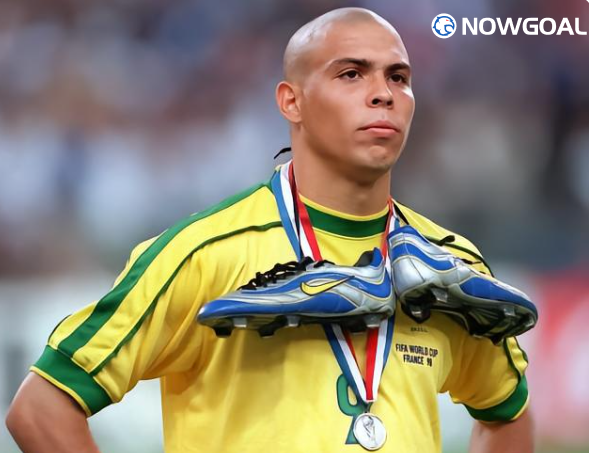
Ronaldo Nazário was seen wearing his Nike boots around his neck after the final
In later years, Ronaldo reflected on the decision to play in the match:
“Maybe by playing, I affected the whole team… But no matter what, I had a responsibility to my country. I didn’t want to miss the final. I respected my own honour, and I believed I was capable of playing. Of course, it was not one of the best matches of my career, but I still fulfilled my duty.”
Brazil team doctor Lídio Toledo, who ultimately cleared Ronaldo to play, later became one of the main targets of public criticism. Toledo defended himself by saying:
“Just imagine this: if I had stopped him from playing and Brazil still lost, I would probably have had to go live at the North Pole!”
Ronaldo’s mysterious medical episode remains one of the great unsolved mysteries in football history. No one has ever been able to determine with complete certainty what caused the incident.
Besides the explanations already mentioned — cardiologist Bruno Caru’s theory that Ronaldo compressed his carotid sinus while lying in bed watching television, and Roberto Carlos’s suspicion of epilepsy — many other theories later emerged.
Some claimed Ronaldo had already been suffering from depression, but the medical staff were afraid to prescribe medication because of anti-doping concerns. Others suggested that injections previously administered to treat Ronaldo’s knee problems may have triggered an allergic reaction. Another rumour alleged that Ronaldo discovered his girlfriend was having an affair with a Brazilian journalist, causing him emotional collapse. There were even conspiracy theories claiming that Brazil, following the wishes of then-FIFA president Sepp Blatter, had deliberately “sold” the World Cup to France.
Of course, all of these theories are based largely on speculation, with no concrete evidence to support them.
The only thing that can be said with some confidence is that epilepsy was probably unlikely. People with epilepsy usually suffer repeated seizures over time, yet Ronaldo never experienced another similar episode for the rest of his life after that night in 1998.
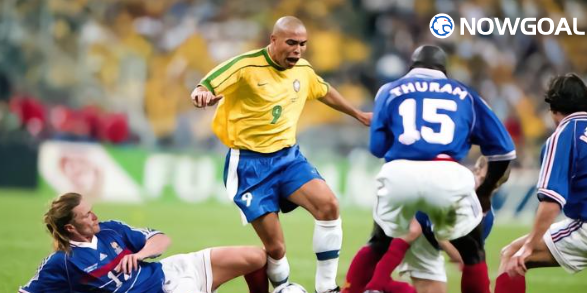
What exactly happened to Ronaldo Nazário before the 1998 World Cup final remains filled with unanswered questions even today.
Four years later, Brazil national football team reached the World Cup final once again. This time, the match took place in Yokohama, Japan, and their opponents were Germany national football team.
On the day of the final, Ronaldo was still haunted by the memories of 1998. After lunch, he was even afraid to take a nap because he worried that the same frightening incident might happen again.
This time, however, his roommate was goalkeeper Dida. Trying to calm Ronaldo down, Dida joked:
“Don’t worry. This time your roommate isn’t Roberto Carlos, so nothing like that will happen.”
To help Ronaldo relax and take his mind off the pressure, Dida took him out to play a little golf before encouraging him to get some sleep. Ronaldo eventually managed to take a short nap, and, of course, nothing happened.
The two headed to the final in much better spirits — and this time, Brazil won.
In 1998, Ronaldo was universally recognised as the finest forward in world football.
Ronaldo combined incredible speed with outstanding technique and possessed remarkable efficiency in front of goal. He often dribbled past defenders and scored in ways that seemed unimaginable. In 1996, while playing for FC Barcelona, Ronaldo scored a famous goal in a 5-1 away victory over SD Compostela in La Liga. During the run, he beat several defenders in succession, and even when opponents tried to pull him back, they still could not stop him. After witnessing the goal, Barcelona manager Bobby Robson remarked, “It’s hard to imagine that goal was scored by a human being.” From that moment on, Ronaldo earned the nickname “The Alien.”
Ronaldo’s famous goal for Barcelona was what earned him the nickname “The Alien.”
In 1997, Ronaldo Nazário joined Inter Milan for a then world-record transfer fee of $32 million. At the time, he was only 21 years old. In his very first season with Inter, he scored 34 goals in 44 appearances, winning both the FIFA World Player of the Year award and the Ballon d’Or in 1997. By 1998, the young striker, still only 22, had become the key figure and biggest star of the Brazilian national team heading into the World Cup.
In fact, Ronaldo had already travelled to the World Cup with Brazil back in 1994. However, he was only 18 at the time and mainly there to learn from the senior players and experience the atmosphere. He did not play a single match. Although Brazil eventually won the tournament, that triumph had little to do with him personally. The 1998 World Cup was Ronaldo’s second appearance at the tournament, but his role was completely different from four years earlier: he was now Brazil’s leading star and most dependable goalscorer.
Meanwhile, hosts France national football team were eager to challenge for the title on home soil, but they were not considered the favourites. Originally, France’s midfield leader was supposed to be Eric Cantona of Manchester United F.C.. However, during a Premier League match in 1995, Cantona became involved in a violent altercation with a fan of Crystal Palace F.C., infamously launching a kung-fu style kick into the crowd. As a result, he received an eight-month suspension.
The incident caused enormous controversy. During his suspension, Cantona missed valuable time integrating with the national team, and his rebellious personality also made him difficult to manage. France manager Aimé Jacquet took the opportunity to remove him from the national team plans altogether. Afterwards, Jacquet established Zinedine Zidane, who has Algerian heritage, as the new midfield leader of the French team.
That infamous kick at a fan effectively brought an end to Eric Cantona’s international career
Zinedine Zidane was first called up to the France national football team in 1994. His debut came in a friendly match against the Czech Republic. Coming off the bench, Zidane scored twice to help France recover from a 0-2 deficit and secure a draw. He later represented France as a first-team regular at UEFA Euro 1996.
France did not win that tournament, being eliminated in the semi-finals, and Zidane’s performances were generally considered solid but unspectacular.
However, France manager Aimé Jacquet always placed enormous trust in Zidane. At the 1998 FIFA World Cup, Zidane remained the creative heart of the national team. During the early stages of the tournament, his performances showed both quality and flaws. He provided two assists in the group stage, but he was also sent off after stamping on a Saudi Arabian player during France’s match against Saudi Arabia national football team.
After advancing from the group stage, France defeated Paraguay national football team 1-0 in the Round of 16, overcame Italy national football team on penalties in the quarter-finals, and then beat Croatia national football team 2-1 in the semi-finals to reach the final. Yet throughout all of those knockout matches, Zidane failed to score a single goal.
Before the final, Zinedine Zidane had not scored a single goal at the 1998 FIFA World Cup
By comparison, Ronaldo Nazário had been far more impressive for Brazil national football team throughout the tournament. As Brazil advanced all the way to the final, Ronaldo contributed four goals and three assists. His most important performance came in the semi-final against Netherlands national football team, where he scored during the match and then confidently converted Brazil’s first penalty in the shootout, helping his team eliminate the Dutch and set up a final against France.
On the evening of July 12, 1998, the World Cup final was set to take place at Stade de France. Earlier that same day, after lunch, Ronaldo returned to his hotel room. His roommate was Brazil left-back Roberto Carlos.
At the time, Christian Karembeu of the French team called Roberto Carlos on the phone. Karembeu and Carlos were teammates at Real Madrid CF, and he simply wanted to chat before the final. While Carlos was speaking on the phone, Ronaldo was lying on the bed watching a Formula One race on television.
Suddenly, Ronaldo began convulsing and lost consciousness. Roberto Carlos immediately sensed that something was wrong. Hurriedly ending the call, he rushed over to check on Ronaldo. He saw Ronaldo shaking violently with foam coming from his mouth. Shocked, Carlos shouted loudly for help.
Teammates from nearby rooms quickly rushed in. Forward Edmundo was the first to arrive, followed by defensive midfielder César Sampaio, who pulled Ronaldo’s tongue forward to prevent him from swallowing it. When team doctor Lídio Toledo arrived, he witnessed a frightening scene: Ronaldo was breathing heavily and saliva was running from the corner of his mouth. Roberto Carlos reportedly told him, “It could be epilepsy.”
At first, Ronaldo Nazário eventually regained consciousness. He had no memory of what had just happened and had no idea why he had collapsed. Teammate Leonardo accompanied him on a walk through the hotel garden and explained the situation to him. Ronaldo also learned that the coaching staff did not intend to let him play in the World Cup final.
According to reports that later emerged, Brazil technical adviser Zico opposed allowing Ronaldo to play, and several players led by Leonardo agreed with that view. However, another group within the squad, headed by captain Dunga, desperately wanted Ronaldo in the lineup. In their eyes, even if he was not fully fit, he remained indispensable.
Ronaldo was taken to hospital, where doctors carried out neurological examinations. The entire process lasted around three hours, yet the exact cause of his seizure remained unclear. Doctors found no obvious physical abnormalities, and Brazil team physician Lídio Toledo also concluded that Ronaldo was fit enough to play.
So what exactly had happened?
Years later, cardiologist Bruno Caru offered a possible explanation: “Ronaldo was lying in bed watching a Formula One race. A movement of his neck compressed the carotid sinus, which regulates heart rate and blood pressure. His heart rate dropped suddenly, which caused the fainting and convulsions.”
However, Roberto Carlos’s earlier comment — “It could be epilepsy” — may have influenced the doctors’ judgement. Believing the episode to be epileptic in nature, they reportedly treated Ronaldo with Phenobarbital, a powerful anti-seizure drug. The medication suppresses brain activity, and its effects would later become a major talking point.
Brazilian players were traditionally known for their relaxed and optimistic mentality. Beyond personality, that confidence also came from their belief in their own superiority. In previous tournaments, the team bus heading to matches would usually be filled with laughter and music. But Ronaldo’s sudden collapse completely changed the atmosphere within the squad.
While the other players were travelling to the stadium, Ronaldo had not even left the hospital yet. Many players still did not fully understand what had happened; they had only heard that “Ronaldo wasn’t feeling well and had gone to hospital.” A sense of dread spread through the team. The players sat in silence on the bus. No music played, and nobody joked or chatted.
British commentator John Motson was preparing to broadcast the World Cup final live on radio to audiences around the world. When he received the official team sheets, he was stunned to discover that Ronaldo’s name was missing from Brazil’s starting lineup, with Edmundo listed in his place.
Motson and his colleagues even wondered whether they had read the lineup incorrectly, unable to understand what was happening. He immediately asked fellow broadcaster Ray Stubbs to contact Brazilian legend Pelé for clarification. But after making inquiries, the answer that came back was simple: even Pelé did not know what was going on.
Brazil had originally planned to replace Ronaldo Nazário in the starting lineup with Edmundo
It was as if a concert was about to begin, only for the lead singer of the band to suddenly be unable to perform. The commentators grew increasingly anxious until they received a revised team sheet. This time, Ronaldo’s name had reappeared in the lineup, replacing Edmundo, who had originally been selected to start.
The confusion only deepened. Even though Ronaldo’s name was back on the list, nobody knew whether he would actually step onto the pitch. Football journalists around the world offered wildly different interpretations, and some even pushed conspiracy theories, suggesting that Brazil national football team were deliberately using the situation to unsettle France national football team psychologically.
Meanwhile, inside the French dressing room, many players also believed it was all part of a Brazilian mind game. Defender Lilian Thuram reportedly said, “Leave Ronaldo out? Impossible! They’re trying to fool us with this trick.”
But it soon became obvious that something genuinely was wrong within the Brazilian camp. The team even delayed going out for their pre-match warm-up. Commentator John Motson later recalled: “Clearly, something had happened in Brazil’s dressing room, but we had no idea what.”
So what exactly was happening behind those closed doors?
After receiving brief treatment at the hospital, Ronaldo eventually arrived at Brazil’s dressing room. He immediately made his position clear to head coach Mário Zagallo: he wanted to play in the final.
“I’m fine. I don’t feel anything wrong,” Ronaldo insisted. He then handed over the doctors’ examination results and added, “The tests say there’s no problem. I want to play.”
Ronaldo Nazário’s stance was absolutely firm. He later recalled: “I didn’t give the coach any other option. He had to accept my decision.” His teammates were delighted, and their confidence ahead of the final immediately grew. Goalkeeper Dida later said, “We all knew Ronaldo was capable of anything on the pitch.”
It was precisely because of Ronaldo’s insistence that coach Mário Zagallo decided to change the starting lineup once again. After all, when a superstar of Ronaldo’s stature believes he is fit to play, it is almost impossible for a manager to leave him out. However, the late reversal also created another serious problem. Earlier that day, Zagallo had hurriedly prepared an entirely new tactical plan for a Brazil side without Ronaldo. Once Ronaldo returned, those emergency plans suddenly became useless.
Meanwhile, France national football team were thoroughly prepared. Before the match, coach Aimé Jacquet had warned his players that Brazil national football team looked vulnerable when defending corners. If France could deliver quality balls into the box, they would have an excellent chance of scoring.
The match unfolded exactly as he predicted.
In the 27th minute, France won a corner on the left side. Midfielder Emmanuel Petit swung an inswinging cross into the area, finding Zinedine Zidane, who had not scored at all earlier in the tournament. Standing 1.85 metres tall, Zidane rose above the Brazilian defence and powered a header into the net.
Then, deep into first-half stoppage time, France earned another corner, this time from the right. Youri Djorkaeff delivered the cross, and once again Zidane attacked the ball first. The header slipped through the legs of Brazilian defender Roberto Carlos and flew into the net.
France were suddenly 2-0 ahead.
Zinedine Zidane scored twice with headers in the final
Ironically, although Zidane was quite tall, heading was never considered one of his greatest strengths. Throughout his entire professional career, he scored very few goals with his head. Yet in this World Cup final, it was almost as if he had divine assistance, as he scored twice against Brazil in exactly the same fashion.
At that point, France national football team were already in a commanding position. But in the 68th minute, the match suddenly took another dramatic turn. French centre-back Marcel Desailly received his second yellow card of the game and was sent off. France now had to survive more than twenty minutes with only ten men, and the suspense of the final immediately returned.
Brazil national football team quickly responded by bringing on striker Edmundo in an attempt to strengthen their attack. France reacted instantly as well, introducing defensive midfielder Patrick Vieira to add more steel and energy in midfield.
After Desailly’s dismissal, midfielder Emmanuel Petit dropped back into defence to partner Frank Leboeuf at centre-back. As France continued to defend courageously, time slowly ticked away. With only five minutes remaining, the outcome of the match already seemed inevitable. The crowd inside Stade de France had erupted into celebration, waiting for France to be crowned world champions.
Petit himself could barely contain his emotions. He shouted to Leboeuf: “My dream has come true!”
Leboeuf, however, immediately interrupted him: “What are you talking about? Concentrate on the game!”
There was a reason why Petit felt so emotional. When he was still a child, he had once written: “One day, we will beat Brazil 2-0 at home and win the World Cup final.” At the time he wrote those words, France had not even been awarded the hosting rights for the tournament. Now, with France leading 2-0 and the match nearing its conclusion, Petit felt as though his childhood dream had come to life.
Then came the final moments of the match. France launched a counterattack, and Petit received a superb pass from his Arsenal F.C. teammate Patrick Vieira. Racing forward at full speed, Petit delicately lifted the ball past the goalkeeper and into Brazil’s net once again.
France led 3-0.
After the match, the Daily Mirror celebrated the famous “Arsenal connection” by printing the headline: “Arsenal Won the World Cup!”
And with that goal, Petit personally rewrote his own childhood prophecy: the score in the World Cup final against Brazil would not be 2-0, but 3-0.
Zinedine Zidane lifted the World Cup trophy high into the air
At the final whistle, France national football team had secured a stunning 3-0 victory, winning the FIFA World Cup for the very first time in their history.
It is worth noting that before the tournament began, France coach Aimé Jacquet had faced fierce criticism from the media. The French newspaper L'Équipe portrayed him as an arrogant schoolteacher who only understood football in theory, lacking intelligence, imagination, and elegance. The paper also criticised his cautious tactical approach and confidently predicted that Jacquet would never lead France to success.
Those attacks deeply hurt Jacquet. In response, he lashed out at what he called “certain media outlets,” accusing them of being filled with “thugs, incompetents, dishonest and irresponsible people.”
After France won the World Cup, however, L'Équipe editor Jérôme Bureau publicly admitted the paper had been wrong: “Although we had serious doubts about Jacquet a few weeks ago, today we sincerely congratulate him. We hope he can hear these words.”
Jacquet, though, refused to forgive them. He replied: “Some sections of the media shamelessly lied. I will never forgive them. I feel nothing but contempt for those people.”
France’s triumph was also helped by the fact that Ronaldo Nazário was almost completely ineffective in the final. Throughout the match, he appeared dazed and far from his usual self, creating very little danger. Nevertheless, thanks to his outstanding performances in the earlier rounds, Ronaldo was still awarded the Golden Ball as the best player of the tournament.
After the final, many people argued in hindsight that Brazil might actually have performed better if coach Mário Zagallo had refused to play Ronaldo.
At the same time, conspiracy theories began to spread. Some claimed that Nike — Brazil’s sponsor and Ronaldo’s personal sponsor — had pressured Zagallo into starting Ronaldo, and that the coach had eventually given in. However, no concrete evidence has ever been produced to support those accusations.
Ironically, Edmundo, the man who lost his starting place when Ronaldo returned to the lineup, strongly believed the conspiracy theory. Years later, he recalled: “Nike employees were on standby 24 hours a day, almost like members of the coaching staff. Their power was enormous. That’s all I can say.”
After the match, one photograph became especially famous: Ronaldo stood on the pitch looking devastated, wearing not only the silver medal for finishing runner-up, but also his pair of Nike boots draped around his neck. To some observers, even that image was interpreted as evidence of Nike’s influence behind the scenes.
Ronaldo Nazário was seen wearing his Nike boots around his neck after the final
In later years, Ronaldo reflected on the decision to play in the match:
“Maybe by playing, I affected the whole team… But no matter what, I had a responsibility to my country. I didn’t want to miss the final. I respected my own honour, and I believed I was capable of playing. Of course, it was not one of the best matches of my career, but I still fulfilled my duty.”
Brazil team doctor Lídio Toledo, who ultimately cleared Ronaldo to play, later became one of the main targets of public criticism. Toledo defended himself by saying:
“Just imagine this: if I had stopped him from playing and Brazil still lost, I would probably have had to go live at the North Pole!”
Ronaldo’s mysterious medical episode remains one of the great unsolved mysteries in football history. No one has ever been able to determine with complete certainty what caused the incident.
Besides the explanations already mentioned — cardiologist Bruno Caru’s theory that Ronaldo compressed his carotid sinus while lying in bed watching television, and Roberto Carlos’s suspicion of epilepsy — many other theories later emerged.
Some claimed Ronaldo had already been suffering from depression, but the medical staff were afraid to prescribe medication because of anti-doping concerns. Others suggested that injections previously administered to treat Ronaldo’s knee problems may have triggered an allergic reaction. Another rumour alleged that Ronaldo discovered his girlfriend was having an affair with a Brazilian journalist, causing him emotional collapse. There were even conspiracy theories claiming that Brazil, following the wishes of then-FIFA president Sepp Blatter, had deliberately “sold” the World Cup to France.
Of course, all of these theories are based largely on speculation, with no concrete evidence to support them.
The only thing that can be said with some confidence is that epilepsy was probably unlikely. People with epilepsy usually suffer repeated seizures over time, yet Ronaldo never experienced another similar episode for the rest of his life after that night in 1998.
What exactly happened to Ronaldo Nazário before the 1998 World Cup final remains filled with unanswered questions even today.
Four years later, Brazil national football team reached the World Cup final once again. This time, the match took place in Yokohama, Japan, and their opponents were Germany national football team.
On the day of the final, Ronaldo was still haunted by the memories of 1998. After lunch, he was even afraid to take a nap because he worried that the same frightening incident might happen again.
This time, however, his roommate was goalkeeper Dida. Trying to calm Ronaldo down, Dida joked:
“Don’t worry. This time your roommate isn’t Roberto Carlos, so nothing like that will happen.”
To help Ronaldo relax and take his mind off the pressure, Dida took him out to play a little golf before encouraging him to get some sleep. Ronaldo eventually managed to take a short nap, and, of course, nothing happened.
The two headed to the final in much better spirits — and this time, Brazil won.
From:News
The Most Popular
-
 Indonesia U19 Squad Boosted by Seven Overseas Talents Ahead of ASEAN Championship
 -
 Atletico Madrid Move Closer to Signing Wolves Midfield Star Joao Gomes
 -
 Chelsea Ready to Sacrifice Joao Pedro in Bold Pursuit of Victor Osimhen
 -
 Ajax Defender Tristan Gooijer Opens Door to Future with Indonesia National Team
 -
 Italy's Coaching Race Intensifies as Mancini Eyes Stunning Return
 -
 Manchester United Circle Bowen and Fernandes as West Ham Fight for Survival
 Telegram
 Facebook
 X
X